Blog
Steel Summit 2026 Successfully Concluded
Bringing the global steel industry together for the second time, Steel Summit 2026 was held on May 13–15 in Çeşme, İzmir. Uniting more than 400 participants and over 200 companies from 25 countries, the summit concluded with a strong message about steel's greener, more digital, and more integrated future.
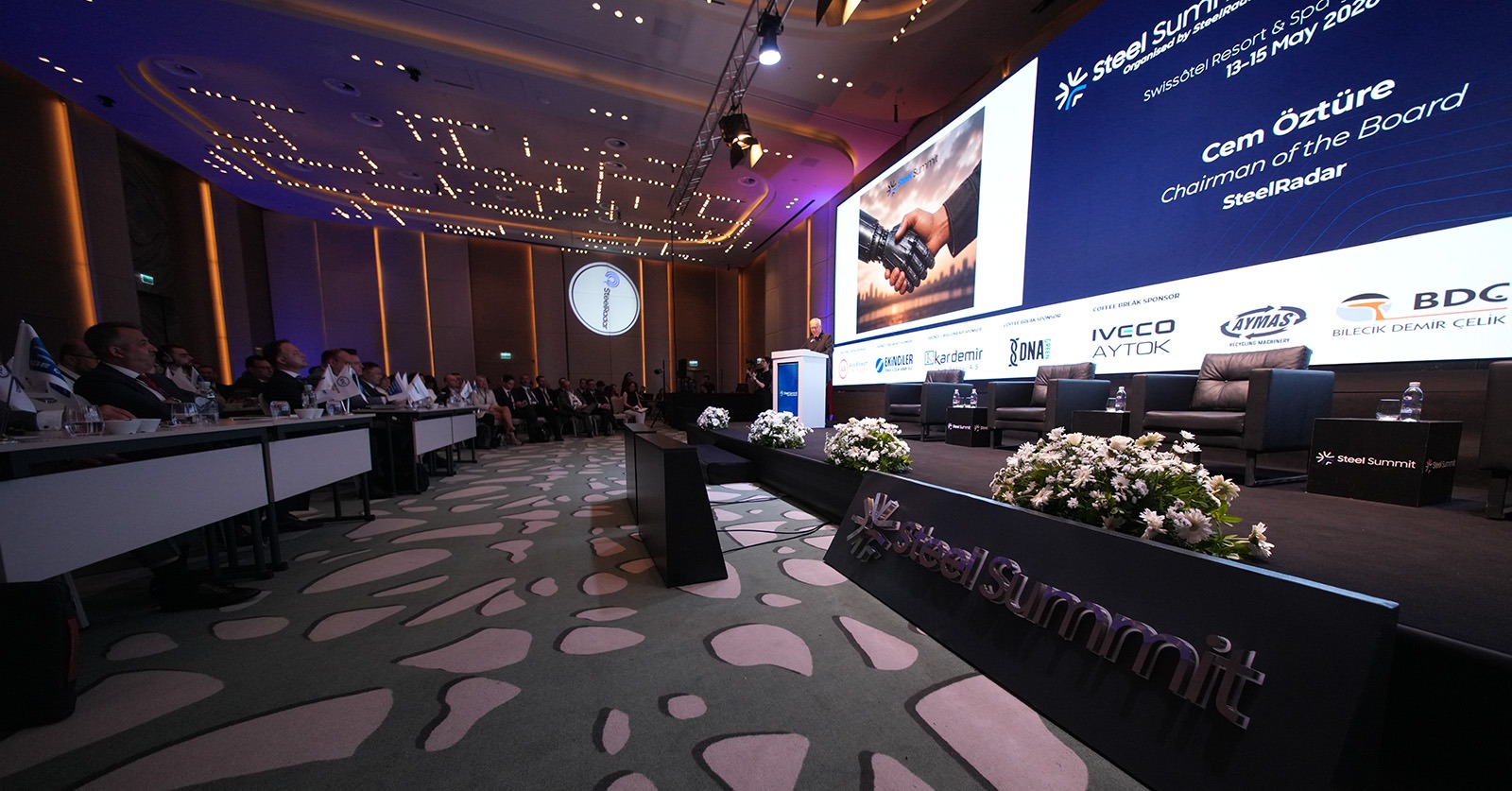
Steel Summit 2026 Successfully Concluded
The 2nd International Steel Industry and Global Markets Summit (Steel Summit 2026), which brought together the global steel industry for the second time, was held on May 13–15 at Swissôtel Resort & Spa Çeşme, İzmir. Organized by SteelRadar, the three-day event addressed not only market developments but also the steel industry’s vision for a greener, more digital, and more integrated future.
One of the most prestigious and highly attended gatherings in recent years, the summit brought together more than 400 participants and over 200 companies from 25 countries across Asia, Europe, the Americas, and the Middle East. Thanks to the extensive global flight network of Turkish Airlines, more than 125 international delegates attended the event. The sponsorship structure also united leading companies from across the industry. Major contributions were provided by İzmir Demir Çelik (İDÇ) as Platinum and Lanyard Sponsor, as well as Ege Çelik, Alex Stewart International, Ekinciler Demir Çelik, Kardemir Çelik Sanayi, DNA PNC Strand, and Iveco Aytok.
Opening the summit, Cem Öztüre, Chairman of the Board of SteelRadar, emphasized that the steel industry is built not only on production and trade but also on strong human relationships. He noted that these relationships often evolve into lasting friendships and represent one of the industry’s greatest strengths.
Uğur Dalbeler, Chairman of the Steel Exporters’ Association (ÇİB), reminded participants that Türkiye is the world’s 7th-largest steel producer and 5th-largest exporter, while drawing attention to the growing trend of protectionism in global trade. He stated that the industry has learned to operate under uncertainty and that current challenges may also create new opportunities.
Representing İzmir Demir Çelik (İDÇ), Executive Board Member Feyyaz Yazar highlighted the company’s production and investment capabilities. He stated that crude steel capacity had been increased to 3.1 million tons, while the company’s 143 MW solar power investment in Kula, Manisa, was making a significant contribution to sustainable production. He also noted that the IPO application for the company’s port operations represents a key step in its long-term growth strategy.
The summit program began with a Welcome Cocktail and networking event. On the first day of the conference, panel sessions focused on raw material markets, evaluating global dynamics in the scrap, billet, and DRI segments alongside the impact of energy costs on pricing. This was followed by an investment strategies session discussing the global economic outlook for 2026 through U.S. macroeconomic indicators, currency movements, and commodity market developments.
Later in the day, discussions covered long products markets, domestic market balances, export opportunities, and capacity utilization rates. During the carbon economy session, the impact of the Carbon Border Adjustment Mechanism (CBAM) and emissions trading systems on the Turkish steel industry was examined. The day concluded with case studies exploring the effects of carbon costs on company balance sheets and approaches to risk management.
The second day focused on stainless steel and flat steel markets. During the stainless steel session organized by PASSAD, participants discussed production capacity, global competitiveness, and sustainability goals. A pricing workshop examining the S&P Global Platts methodology explored market transparency and the role of benchmark pricing. In the flat steel segment, key topics included slab cost optimization, HRC imports, and the impact of changing European demand patterns on exports.
In addition, participants examined the effects of the global economic outlook, tightening financial conditions, geopolitical risks, and financing challenges on the steel sector. Industry prospects were evaluated through short- and medium-term scenarios.
Steel Summit 2026 evolved beyond a traditional conference into a powerful business networking platform through intensive B2B meetings. Participants established new partnerships and commercial connections, generating significant business opportunities throughout the event. The summit concluded with a strong message that the future of steel is moving toward a greener, more digital, and more integrated structure.
Latest Updates
Don't forget to follow us to find out what to expect at Steel Summit 2027 and to keep up to date with all the updates!